


Jani Jaakkola is responsible for log procurement for the Pfeifer Group in Finland together with a team of 23 specialists. As Forestry Director, he works at the interface between forest owners, sustainable forest management, relevant stakeholders and industrial processing. In this interview, he explains how integration into the Pfeifer Group is influencing forestry practices and timber procurement in particular – and the opportunities emerging from this development.
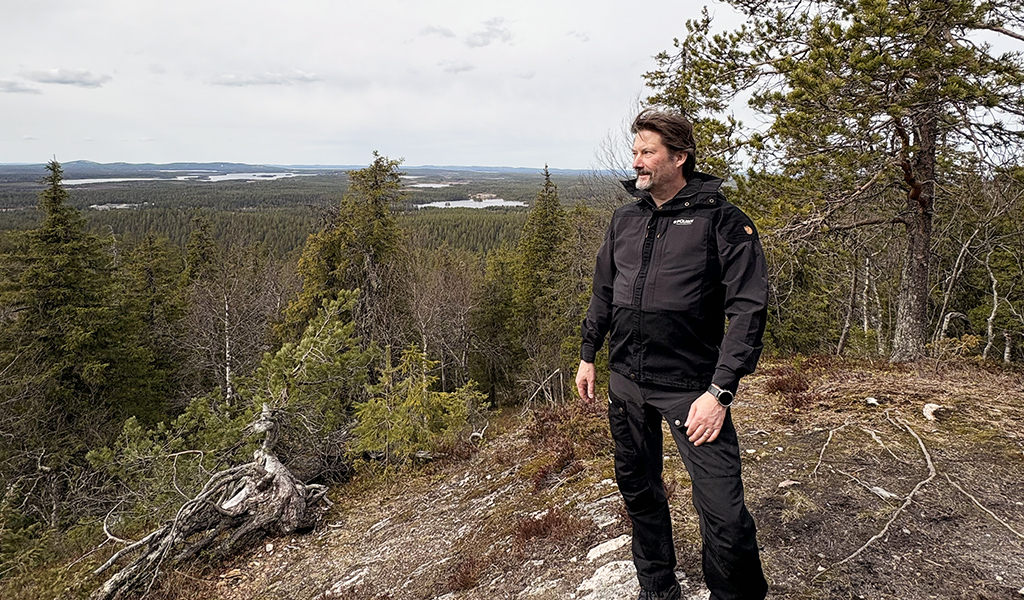
Mr. Jaakkola, you are responsible for the Pfeifer Group’s log procurement in Finland. What exactly does your role involve?
Our work begins at the very start of our entire value chain. We work closely with private forest owners, jointly plan forest utilisation and organise the entire process from harvesting through to delivery at the sawmill. In Finland, this role is very comprehensive. Many decisions are made directly on site. This requires experience and a strong understanding of forestry, timber procurement, forest owners and industrial requirements. At the same time, we always think long term. A forest grows over generations – and we approach this responsibility accordingly.
Around half of our raw material comes directly from private forest owners. The other half is sourced from state-owned and jointly managed forests, as well as through partnerships with the fibre industry. We cooperate with these partners through an exchange model: we supply pulpwood and sawmill by-products, and in return receive saw logs.
Your procurement area is exceptionally large. What does this mean for your day-to-day work?
In our region, there are around 62,000 forest owners, each owning more than 10 hectares of forest. Sixty per cent of forests are privately owned, accounting for around 85% of harvested timber. These owners are key partners for us. The size of the area requires extensive personal contact and regular site visits. This involves a great deal of travel, but also brings variety to our work.
Our procurement area stretches approximately 550 kilometres from north to south. Accordingly, our timber buyers are distributed across the region. We operate several offices, as older forest owners in particular still place great value on personal consultation.
How do you approach log procurement in practice?
Procurement follows a clearly defined process. Forest owners often contact us directly. At the same time, we actively assess forest stands and make use of digital platforms. This is followed by an on-site inspection, during which we assess volumes, timber species and costs. Based on this, we prepare an offer that is discussed personally and aligned with the respective forest management objectives of the forest owner.
What are the key aspects discussed during these conversations?
We discuss prices, assortments and framework conditions such as timber assortments, harvesting methods and aspects relating to biodiversity and sustainable forest management. Once the contract has been concluded, we organise harvesting and transport. The forest owner receives the agreed payment. Reliable cooperation forms the basis of this type of partnership. Many relationships have existed for years. Trust is the decisive success factor.
How have procurement and processing developed at the Kajaani site?
Modernisation has significantly increased efficiency. We are now able to process log more precisely and utilise smaller log diameters directly on site. This increases the proportion of sawable timber obtained from harvesting areas and improves yield already in the forest. At the same time, we have expanded our own procurement operations and now manage volumes and qualities more precisely. This gives us greater stability, particularly in raw material supply, which is becoming increasingly important in a more demanding market environment.
What changes has integration into the Pfeifer Group brought to your work?
Processes are now more structured, decisions are increasingly data-driven and based on exchange with the Pfeifer Group’s international locations. This additional expertise helps us continuously improve our work.
How are forest owners and partners experiencing this development?
For them, it is crucial that cooperation remains reliable – and that is undoubtedly the case. We are available locally as contact partners, communication channels are short and decisions are transparent. At the same time, alongside a stable economic foundation as a family-owned company, the Pfeifer Group offers another important quality: Pfeifer has valued sustainable relationships for decades. This creates trust, which is a decisive factor particularly within the Finnish forestry sector. Forest owners also appreciate that we are part of a financially strong corporate structure. That provides security.
What role does the Pfeifer Group’s international orientation play in your work?
It expands our opportunities considerably – we are now active in significantly more sales markets. This allows us to utilise different qualities more strategically. The combination of a Nordic raw material base and the international sales network of Pfeifer Timber GmbH creates additional added value and makes the entire system more resilient.
What significance does this development have for the Northern Finland region?
Forestry is a key economic driver in the region. Investments such as the recent measures implemented at our sites secure jobs and create additional employment – both within the mills and throughout the entire value chain. The region’s strong raw material base provides the foundation for this.
In public debate, the role of international owners is sometimes viewed critically. How do you perceive this?
We spend a great deal of time in the forests and maintain direct personal contact with forest owners and various partners with whom we organise operations on site. For all of them, what matters most is that cooperation works well and that future prospects remain stable. That is what we are measured against. The development over the past three years has shown our partners that we have built future-oriented structures. We receive a great deal of positive feedback for this.
What do you expect for the coming years?
We are currently undergoing a transformation process that is opening up new opportunities. The key is to further strengthen cooperation with forest owners and continuously improve our organisation. The combination of regional expertise and the strong network of the international Pfeifer Group provides a future-oriented foundation for this. It is a constellation from which everyone benefits.


